

How Long Does it Take to Fill IT Roles in 2026?
Quick answer: Hiring IT roles in 2026 usually takes longer than the 30-day timeline many teams still expect. Average time to fill now ranges from 63 to 68 days, with senior, AI/ML, cybersecurity, and niche technical roles often taking much longer. Faster hiring depends on clear requirements, market-aligned pay, shorter interviews, and prequalified pipelines.
Most hiring plans still assume roles will close in about 30 days. But that timeline rarely holds up anymore.
Many roles stay open for two months. Some stretch past three. Senior and specialized positions can sit for half a year or longer. At that point, the issue moves beyond recruiting speed and starts affecting team morale and business outcomes.
If your hiring timelines aren’t lining up with your plans, you’re not the only one seeing it.
This breakdown gives you a clear view of time to fill by role in 2026, what’s driving delays, and where most hiring plans break down.
The National Baseline
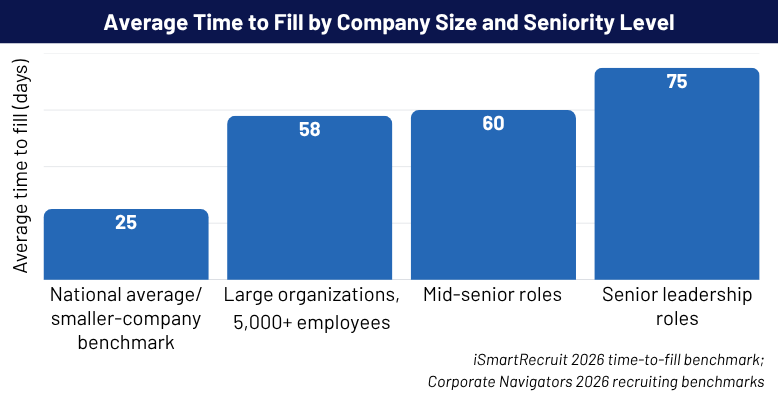
Benchmarks vary by source, but recent 2026 data puts average time to fill anywhere from the mid-40s to 60+ days. Corporate Navigators cites a national average of 63–68 days across industries, while iSmartRecruit reports a lower global benchmark.
Company size often determines the pace:
- Large organizations (5,000+ employees): ~58 days
- National average/smaller company benchmark: closer to ~25 days
Larger companies involve more stakeholders and approvals, which slows hiring decisions.
Role seniority adds another layer. Nearly 40% of senior-level roles take more than 90 days to fill. It’s a timeline that shows up often enough to plan around it.
If your hiring plan assumes a one-month turnaround, you’re working from outdated expectations.
Time to Fill by Role in 2026
Most teams don’t realize how wide the gap is until they start hiring. Timelines stretch past expectations and roles stay open longer than planned.
The average time to fill software engineer roles and other technical positions varies by position. The timelines below show where expectations break down across technical roles.
Sources: Corporate Navigators, iSmartRecruit
Looking across roles, a few consistent trends emerge:
- Specialized roles take longer
- Senior roles extend timelines
- AI and cybersecurity roles move on a different curve
The IT hiring timeline in 2026 varies widely depending on the role. Some positions move in weeks, but others take quarters.
What’s Driving the Slowdown
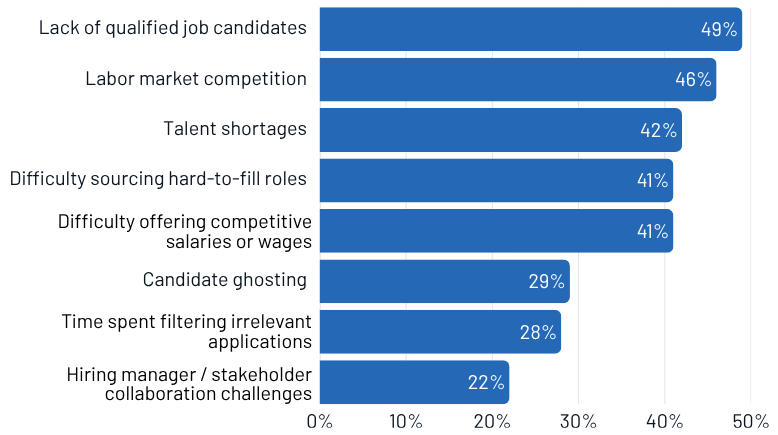
Several factors push timelines out, and they tend to show up together. A tight candidate market, longer interview cycles, and misaligned expectations can stack quickly and turn what should be a 45-day process into something much longer.
Most teams deal with more than one issue at the same time.
Candidate Scarcity for Skilled Roles
AI and cybersecurity talent remain difficult to find. In ManpowerGroup’s 2026 Talent Shortage Survey, about 72% of employers report difficulty finding the technical talent they need, with AI skills leading the list.
Most candidates field multiple opportunities at once, which shortens your window to engage and close. When supply stays tight, even well-run hiring processes take longer because fewer candidates meet the bar from the start.
Market Competition in Key Locations
Hiring moves faster in major tech hubs, and candidates there expect quick decisions. If your process lags behind other companies in the same market, you lose ground early.
Even remote roles feel this pressure because candidates compare offers across regions and prioritize compensation and flexibility.
Pay Misalignment
Compensation gaps slow hiring more than most teams expect. Candidates often stay engaged through early interviews, then drop out when offers don’t match the market.
That delay pushes teams back to sourcing and restarts the process, which adds weeks to the timeline.
Lengthy Interview Processes
Every additional interview step increases the chance of losing a candidate. Long gaps between interviews create friction and signal a lack of urgency.
Candidates interpret slow movement as a sign of internal misalignment, which makes them more likely to accept another offer.
Seasonal Hiring Surges
Hiring demand spikes at certain points in the year, especially at the start of new budget cycles and after major product pushes.
During these periods, recruiters and hiring managers handle more open roles at once, which slows response times and stretches timelines across the board.
The Cost of Waiting
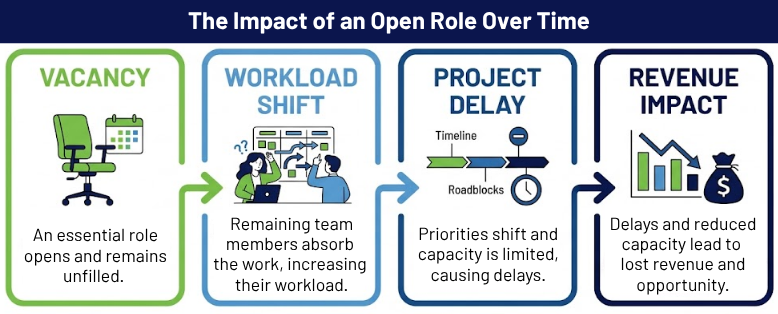
An open role doesn’t sit idle. The work still needs to get done, so it shifts to the rest of the team. But doing so stretches people thin and forces trade-offs on what actually gets prioritized.
At the same time, candidates aren’t waiting around. The strongest ones move quickly and often have multiple options in play. If your process takes too long, they make a decision without you.
The longer a role stays open, the further everything gets pushed out. Hiring and onboarding get delayed, and the point at which that person starts making an impact moves further down the line.
How to Beat the Benchmarks
You can’t change the market, but you can tighten how your hiring process runs. The biggest gains come from cutting delays and making decisions faster.
Tighten the Role Definition
Clear role definitions make a bigger difference than most teams expect. When requirements stay vague or overly broad, you attract a high volume of candidates who don’t actually fit. This slows screening and creates noise early in the process.
When you define what success looks like up front (skills, experience, outcomes), you spend less time filtering and more time evaluating candidates who can actually do the job.
Align Pay to the Market
Compensation shapes how long a role stays open. If your pay range falls behind the market, candidates will stay engaged through early conversations, then drop out once expectations come into focus. Then you’ll have to restart the search late in the process.
When pay aligns with current market conditions, candidates stay engaged through the offer stage, and you avoid losing momentum after you’ve already invested time.
Reduce Interview Steps
Every additional interview step adds time and creates another point where candidates can disengage. Strong hiring processes focus on the conversations that drive decisions and cut anything that doesn’t.
When teams streamline interviews, they move faster and give candidates a clearer sense of direction. That keeps the process moving without sacrificing quality.
Move Quickly Between Steps
Delays often happen between interviews, not during them. Waiting days to schedule the next step or provide feedback slows everything down and signals a lack of urgency. Candidates notice that.
When teams move quickly between interview steps (think tight scheduling, fast feedback, upfront timelines, and clear next steps), they keep candidates engaged and reduce the risk of losing them mid-process.
Use Prequalified Pipelines
Starting from zero with every role adds unnecessary time. Prequalified pipelines change that. When you work with candidates who have already been vetted for skills and experience, you skip the early sourcing phase and move straight into evaluation. That shortens timelines and improves match quality at the same time.
Work with a Partner Who Already Has the Pipeline
GDH helps teams move faster.
Many hiring delays happen before candidates reach the interview stage. Sourcing, screening, and early qualification can take weeks, especially for specialized IT roles. GDH helps teams shorten that front-end work with active pipelines of prequalified IT professionals.
Instead of starting from scratch, hiring teams can focus on evaluating candidates who already meet the role’s baseline requirements. That improves speed, accelerates candidate review, and helps keep qualified candidates engaged while competitors are still sourcing.
GDH’s Best of Staffing recognition reflects consistent results in both client satisfaction and candidate fit. The goal is straightforward: move faster without lowering standards, so filling critical roles doesn’t stall business priorities.
What to Expect Moving Forward
Hiring timelines in 2026 don’t match the assumptions many teams still use. If you plan for 30 days, you’ll run into delays. If you plan for 60-90 days, you can build a process that supports that timeline or improve it.
The difference comes down to visibility and execution.
When you understand time to fill benchmarks, you can set realistic expectations, adjust your process, and avoid the gaps that slow hiring down.
When timing matters — and it always does — having the right partner changes the outcome. Tell us which role you’re trying to fill, and we’ll tell you what to expect and how we can help. Contact us to start the conversation.
Frequently Asked Questions About Time to Fill for IT Roles
What is the difference between time to fill and time to hire?
Time to fill starts when a role opens and ends when a candidate accepts. Time to hire starts when a candidate enters the process and ends at acceptance.
When should companies start recruiting for critical IT roles?
Start recruiting before the requisition opens when the role is business-critical, hard to source, or tied to a project deadline. Early pipeline building reduces delays once approval comes through.
How long should an IT interview process take?
A strong IT interview process should usually take two to four weeks once qualified candidates are identified. Longer cycles increase drop-off, especially when candidates have competing opportunities.
Why do IT candidates drop out before the offer stage?
Candidates often drop out because of slow communication, unclear expectations, low compensation ranges, or too many interview steps. Strong candidates usually compare multiple opportunities at once.
What is a good time-to-fill benchmark for technical roles?
A good benchmark depends on role complexity, but many technical roles now take closer to two months than 30 days. Specialized roles need longer planning windows.
How can hiring managers improve time to fill without lowering standards?
Hiring managers can improve time to fill by defining must-have skills early, aligning pay before launch, giving fast feedback, and limiting interviews to decision-making conversations.
Do remote IT roles fill faster than onsite roles?
Remote IT roles can fill faster because the talent pool is larger, but competition also increases. Clear compensation, flexibility expectations, and fast decisions still determine hiring speed.
Why do some job postings stay open for months?
Some postings stay open because requirements are too narrow, pay misses the market, approvals stall, or the company keeps roles posted for pipeline-building rather than immediate hiring.